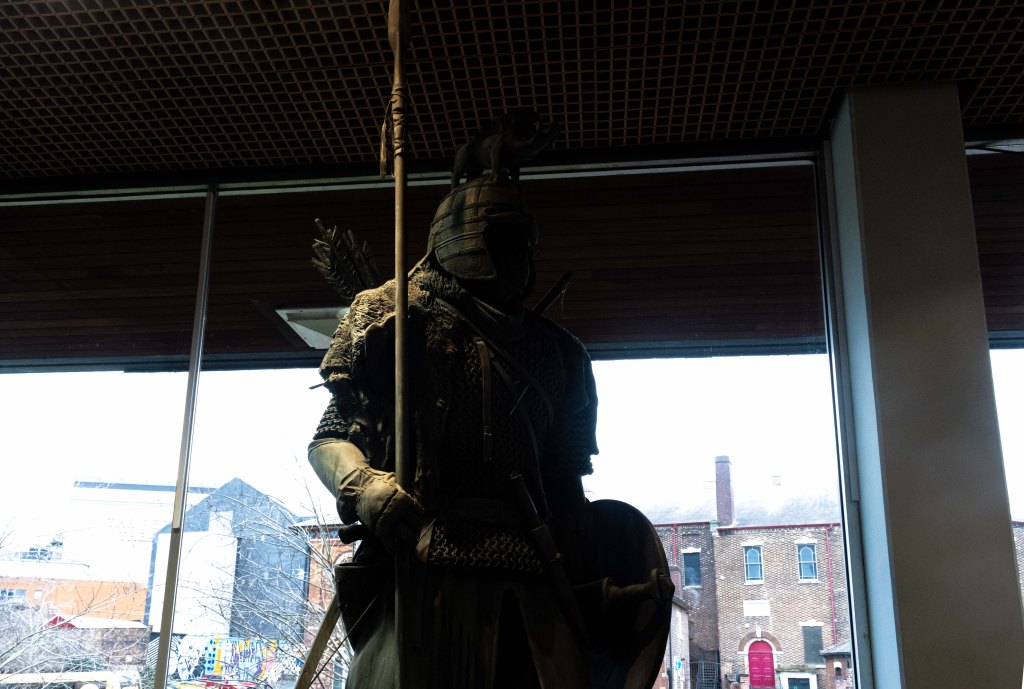
Celtic Warrior in The Potteries Museum & Art Gallery foyer
18/01/2024
Fellow Reader,
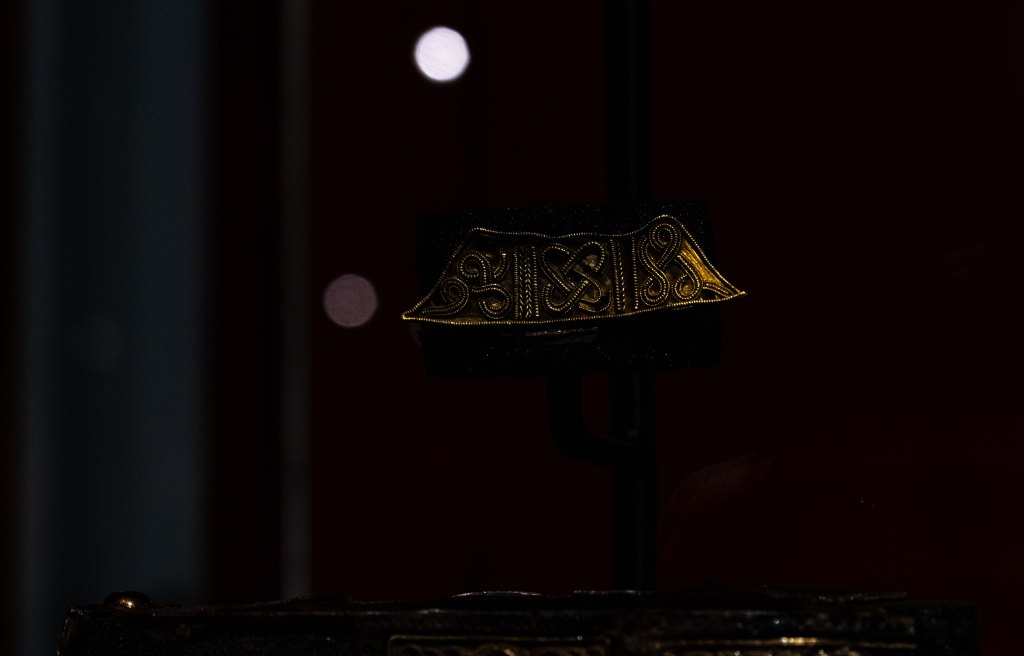
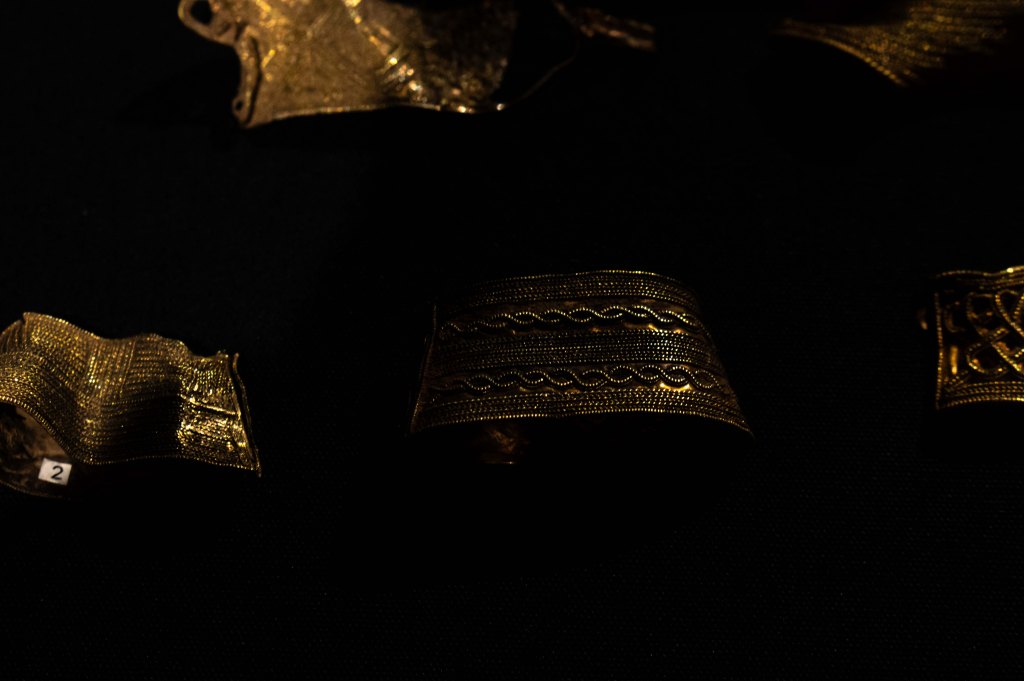
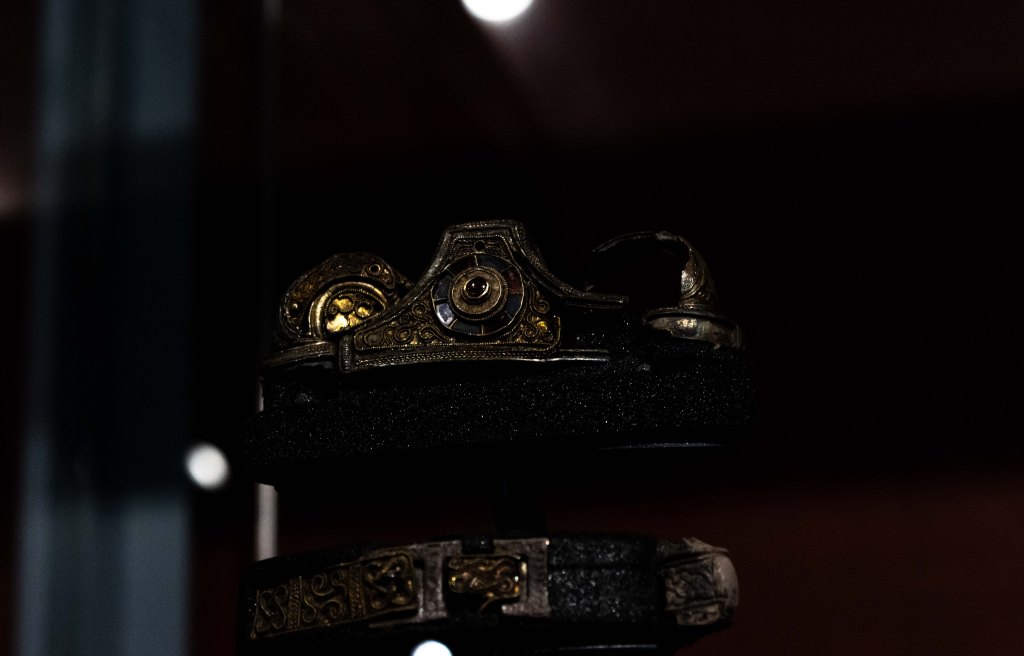
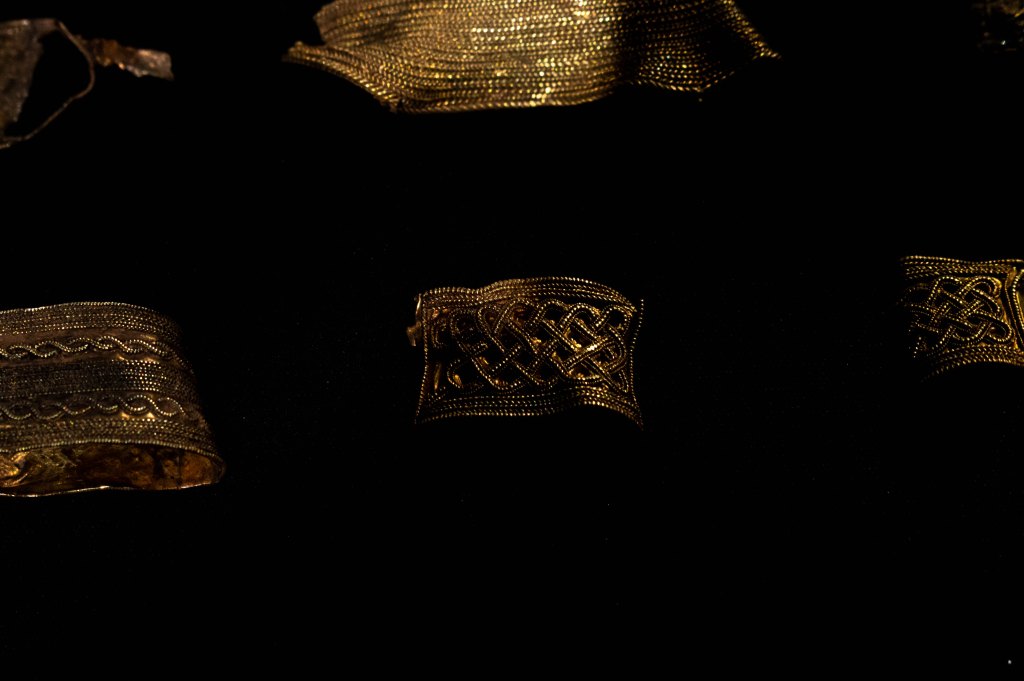
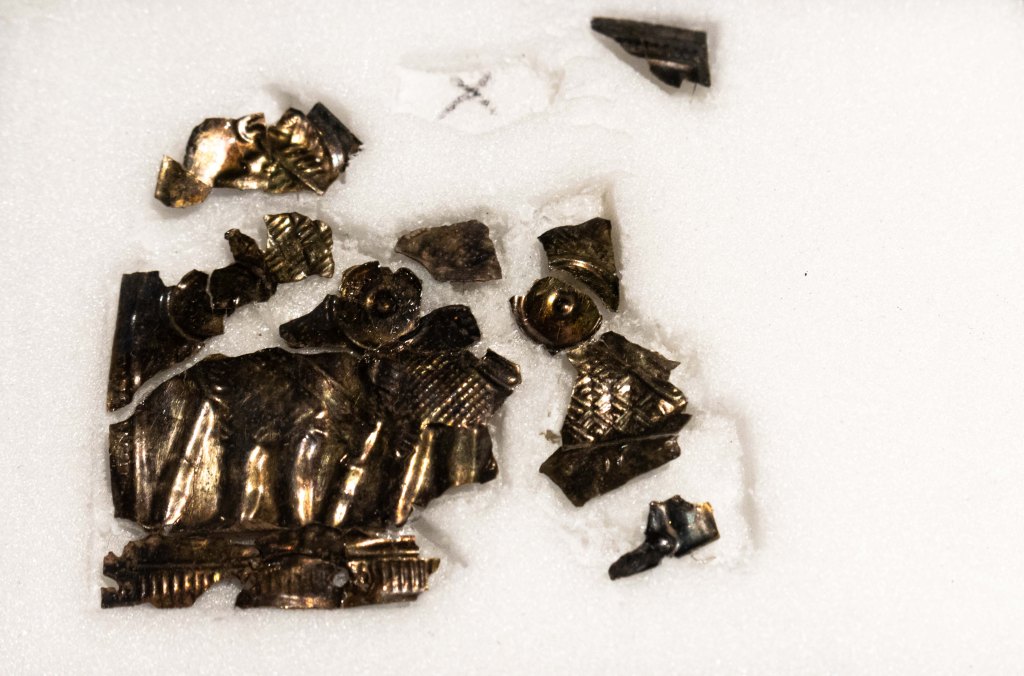
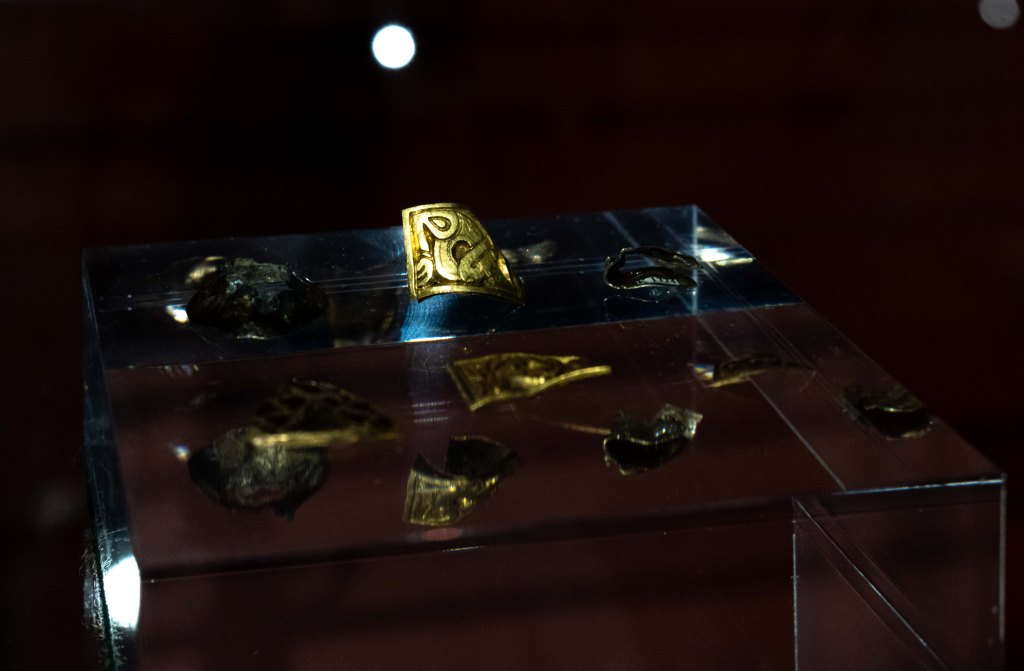
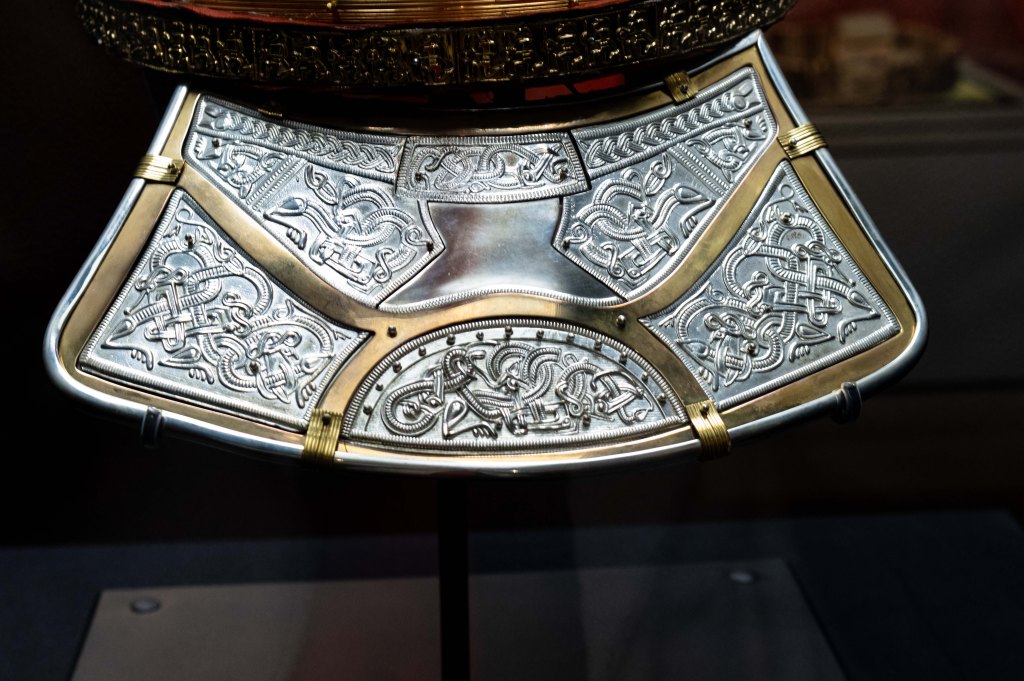
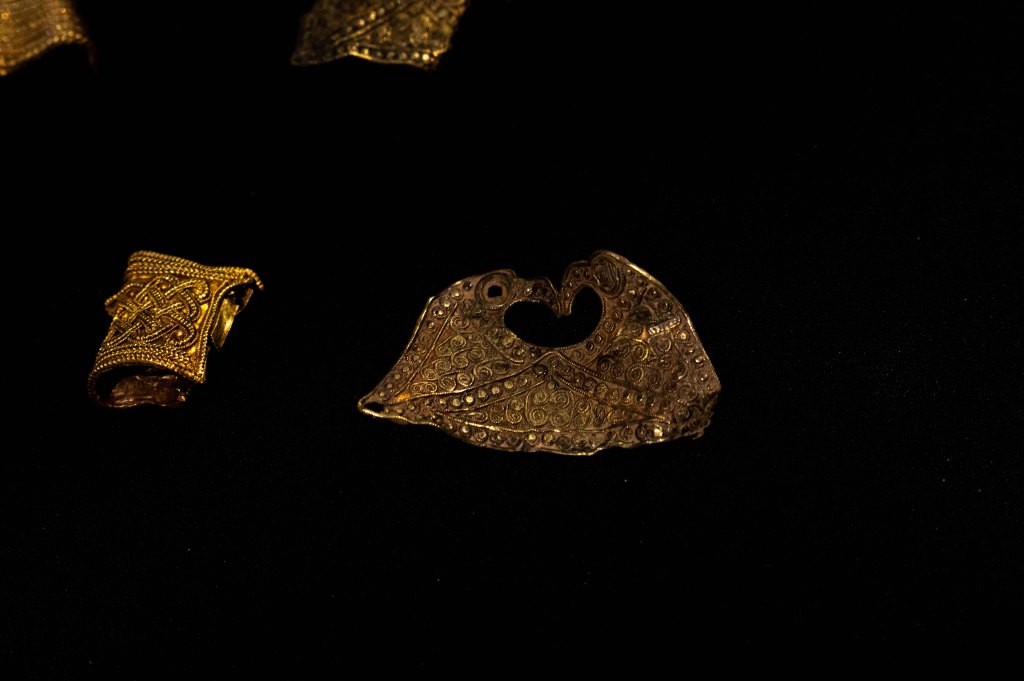
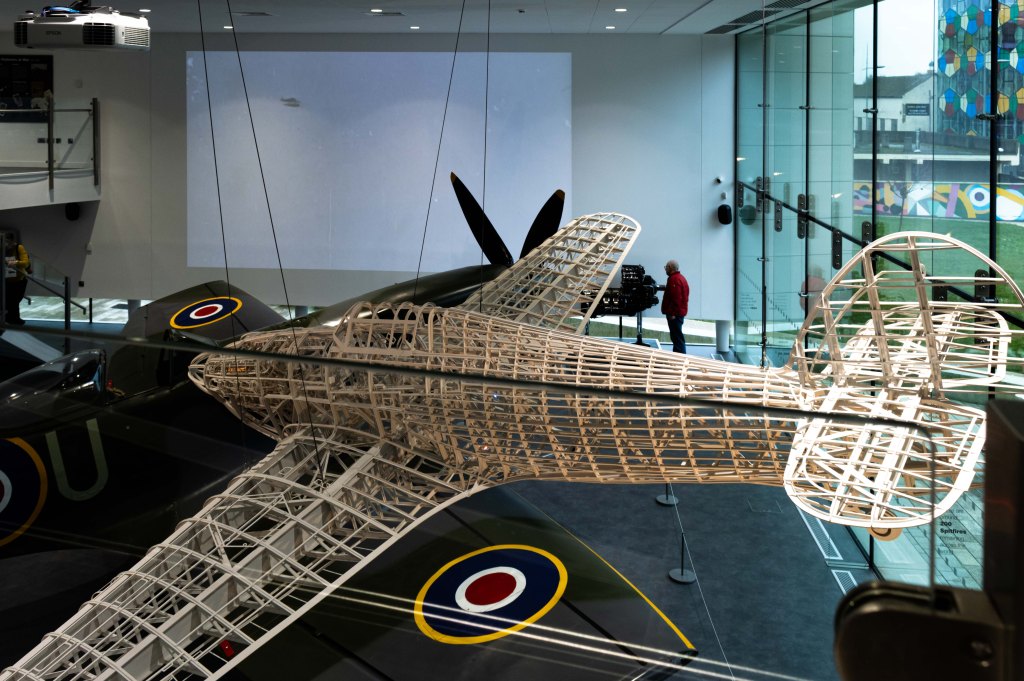
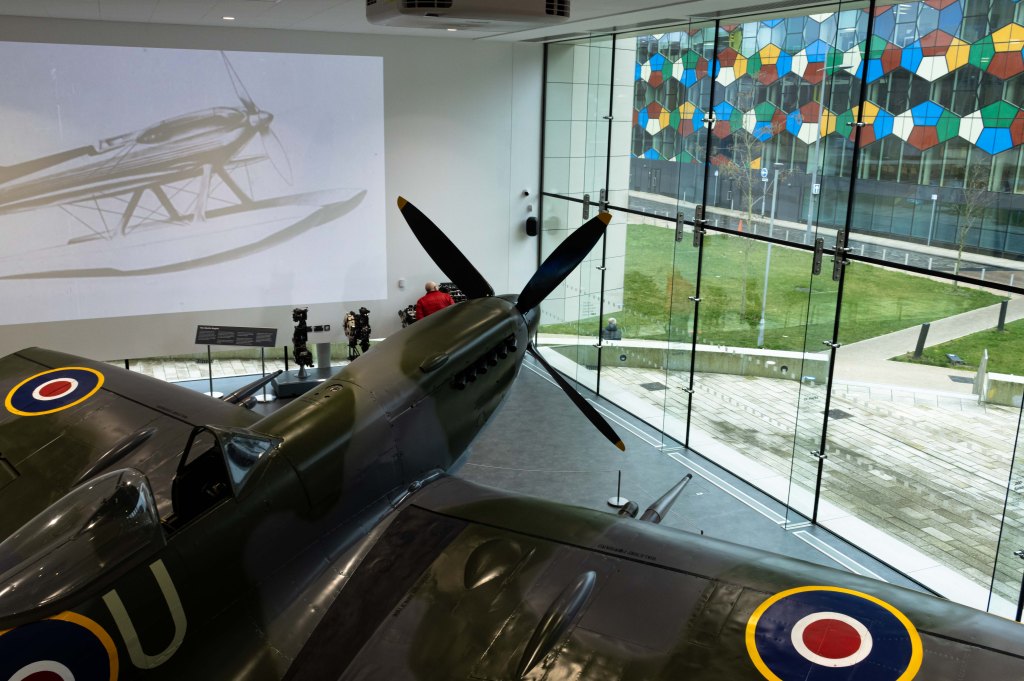
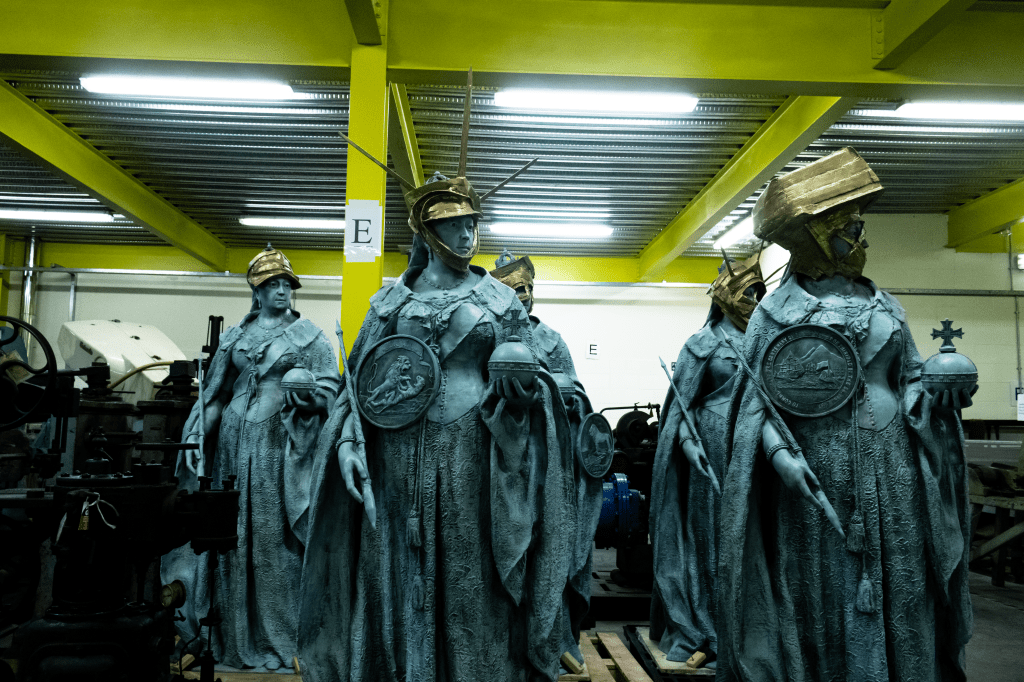
On January 15th, I had a great opportunity to visit The Potteries Museum & Art Gallery, which jointly acquired the Staffordshire Hoard with the Birmingham Museum and Art Gallery in 2009. While Birmingham’s half is still out of public view due to its temporary closure since 2021, I took the opportunity to see Stoke-On-Trent’s half with Toby Watley, Director of Collections, and gain some insight into what it was like at Birmingham Museum at the time of the Staffordshire Hoard being found and put on display.
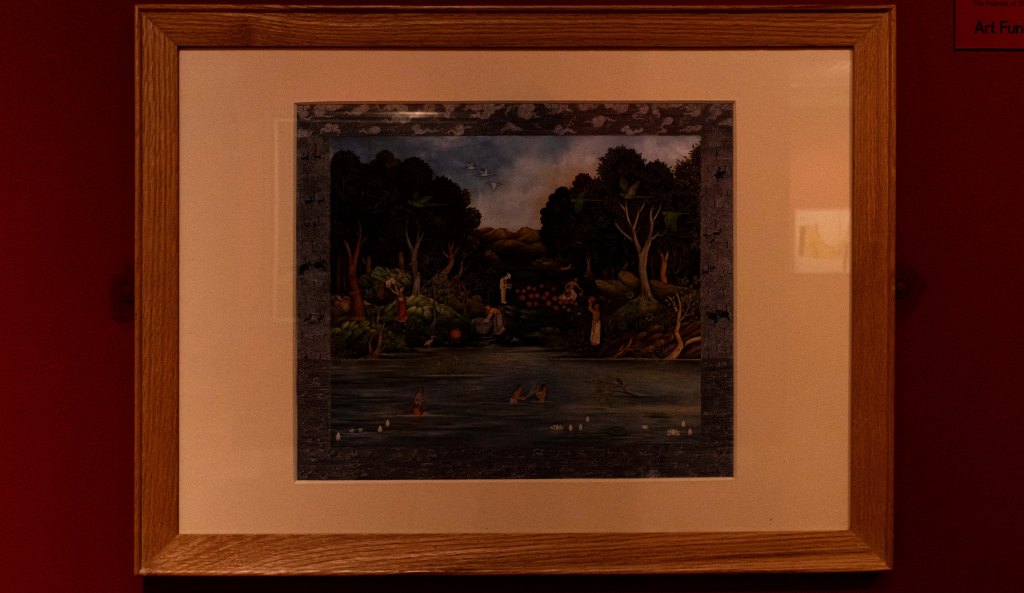
Rather than walls of text, I thought to keep this entry simple and show a visual diary of the trip:
Happy New Year! It’s the year of the Dragon, as said the year of abundance, opportunities, leadership and self-reflection and as a fellow Snake, I feel there must be a kinship with the Dragon. Next year is the year of the Snake for the first time since I was 12…Finally! Is my universal energy rebirth due, Queen? I try not to delve too deep into astrology and meanings in years because as a romantic with a desire to believe that everything means something and everything is interconnected, I am too easily convinced. All I can hope is that this next year is filled with new opportunities, new experiences, new and old friends, and happiness. I must admit as I have just graduated and the end of the fellowship in mid-April approaches, I am both anxious and excited about what is next. I am looking in a lot of places, applying and planning, but everything is very uncertain, as it always is. The unknown is, well, unknown. The best and worst scenario flashes through my mind. I know I can do it, will the universe let me?
Speaking of graduation, it went great! I am so proud of myself for getting a Masters with Distinction, I didn’t think it would be possible. I actually told myself at the start that it’s fine if I don’t do well since Master’s grading is harder, I’ll get a Master’s anyway. It was a really lovely experience to finally celebrate those successes with both tutors and peers who have been so important to me over the past four years. I was even gifted a dragon brooch by my
Sorry, I have 0 chill. I am a very intense person on the inside.
Everything is the end of the world all the time.
Illustration by Dugald Stewart Walker
I have been listening to Ins and Outs for 2023/2024 by The White Pube while trying to write this and while I won’t directly do that, I am quite inspired. I even deleted the Twitter app while listening…Am I a sheep? Maybe.
AIM: Fellowship until April
I still have half of the fellowship left and I aim to focus on developing my VR experience inspired by the objects in the archive at the Birmingham Museum Collection Centre with Birmingham Open Media (BOM) as a part of their Immersive Arts Bootcamp. I hope to build a portfolio of skills through that course as well which will hopefully lead to new opportunities.
final visits to MCC
2. Deleted Twitter (….X)
I’m putting my energy and brain into more meaningful and productive spaces this year and Twitter is not one of them. I’ve been on Twitter for probably nearly a decade and while I have befriended some of the kindest, funniest people across the world through it, they use other apps to keep in contact.
3. Deep diving into learning Latin and Arabic on Duolingo
I quit Duolingo mid-way through 2023 after losing a 100+ day streak. I was devasted. Mortified. Ashamed. No more, I have returned and I am done with German for now. It started with returning to Latin and I found it really really easy as there is a lot of overlap with Spanish and English so I am learning Arabic alongside that. Surprisingly, I am also finding it quite easy to get into. I’m not sure, they just seem to make sense to me and I’ve been able to whizz through to nearly 2k points on both languages in the past few weeks.
4. Continued development of the Book project
As mentioned in the previous post, I am developing a book project with my research group ATHENA. In the past few weeks, there has been a winter break but I’ve been slowly collecting artist references. drawing and slowly returning to reading. It has introduced a bit of academic structure back to my practice and it is something I will need to consistently hold myself accountable for going forward. I have been taught a structure to approach projects with, it’s now time to put that into action without the academic pressures.
5. Pursuing curatorial ambitions
I think this is something I will be doing later in the year but it’s something I’ve been wanting to pursue more and more as I would like to open my own project space/gallery one day, starting with gaining experience from smaller exhibitions, training and DIY projects. Especially within the digital space.
6. Digital Limitations
My mental health has definitely been taking a hit from using my phone too much and I would like to spend less time on Instagram. I’ve set a timer of two hours on Instagram a day to start with and I’m putting my foot down on signing up to any new social media. No Threads, thanks! I’ve also limited other things like gaming time to 2 hours and turned off my computer after 7 hours of use. I was without my phone recently during graduation and it was actually okay. I wasn’t freaked out by it, only mildly inconvenienced by not being able to find my family straight away.
7. Return to drawing and painting
I would like to maintain these skills but I also miss them! It’s where I started and I want to try to draw every day again.
8. BOM Bootcamp
As previously stated, I am pursuing digital practice and job opportunities. The course will run until March and then after I can start pursuing opportunities in this field!
9. More cleaning, more walks, more meditation for peace of mind
10. Continue learning after finishing higher education
11. Growing from rejection
12. Keeping my phone on loud in order to not check my phone if a notification has come in – it will tell me.
13. Biting my nails
14. Writing my feelings and days down
16. Being my own champion to keep my ambition and drive anew
17. Alcohol
After a lot of reflection in the past couple of months, I have decided to quit alcohol. I’ve never personally had a drinking problem, but its effects on others have caused me a lot of pain and I no longer want to be a part of the British drinking culture. I’m done!
Illustration by Gustave Dore
I do feel like I’m going through a weird, in-between time in my life after graduation and before the next big role. Keeping a blog every two weeks was very ambitious, the rest of the blog will be monthly so there will most likely be 3 more posts before the end of the fellowship with the end of January, February and March. I do want to continue this blog in some form throughout the year but maybe monthly, as a monthly text to keep up writing which might be updates on practice or experimental pieces of writing. An aspect of this is that I want the pieces to be longer forms of prose rather than short bits written in hast every fortnight. So to effectively build a portfolio of writing as I aim to do, they are monthly and longer going forward.
Something I have to remind myself of when I’m deep into a maladaptive daydream.
I wish I talked to you more than I did in my mind when I’m self-soothing in my loneliness…
I’m trying to make an active decision to stop living within this world within my head, this world in which I experience things before the event even happens and then I am ultimately disappointed when it doesn’t surmount to romanticised fiction. In turn, I am finding gratitude easier to access and feel when I am actively turning this side of my brain off. It is a seductive state, these thoughts in my head manifest into a being I can mould, befriend, and talk to. She is the Changeling, morphing into whomever I want her to be. Merely a springboard for what is ultimately not and never there. Whoever’s vocal tone was last registered is easier to talk to, it’s like Play-Doh for my mind. But it’s not real and it’s not fair. This Being brought me a lot of comfort, but now I’m not so certain I need to be seduced by the Faery anymore. I once read a Tumblr post screenshot about putting overthinking into perspective as the original poster told their partner that they worry their partner hates them or resents things they do and the partner responded, “I wish you didn’t think of me like that” as it was hurtful to them to be viewed in such a light. This could be applied to a lot of scenarios in which people become reduced to mere figments in their minds.
I recently bought an ancestry test because I caught myself saying yet again, I will do that one day when it costs less. Those situations bug me, you put them off to put them off and then they will always be, put off. Something we want to do, something we might do, but will ultimately never do. It was half off in a sale, so I went for it and while £60 is still quite a lot for me, I’ve said to myself it’s for my research for my artistic practice since I have started to look more into Celtic heritage, culture, and stories. I refuse to put it off any longer.
And it is, for research and for art.
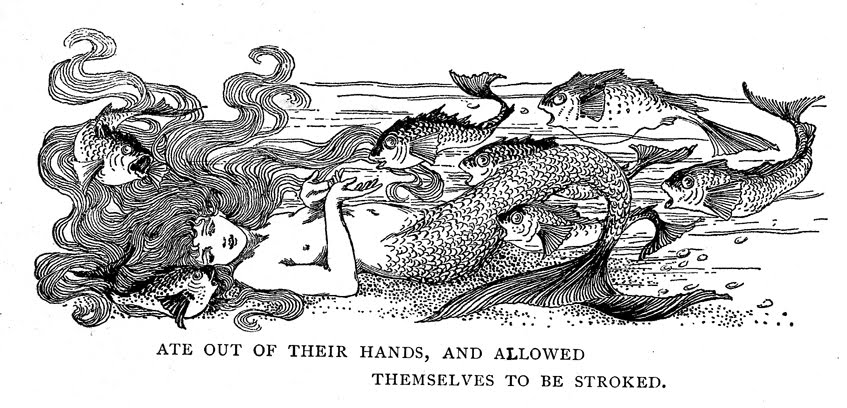
Illustration by William Heath Robinson
My work comes from a place of meaning. A place of heritage, a search for where it all came from, and where it all ended up (me). It’s not from a place of narcissism…gosh, I hope not anyway. I genuinely feel lost as a 22-year-old fresh graduate, ever defined by other people, and lost in doing my own accomplishments justice. I’ve been pushed off a cliff into post-graduate life, as I recently heard it described. It took about a month to regret not immediately doing a PhD to put this type of responsibility off. I’m desperate to hold on to any of my belongings which now plummet with me off the cliff at terminal velocity, desperately trying to hold on to a sense of who I am. I wish I could say I was being dramatic. So maybe some percentages will help as some validating, existential grounding. Ever defined by other people, to be defined by more, even older people. Isn’t that what heritage is all about?
Something else about art I recently started thinking about again after a conversation with a friend, is that it will always be intensely personal. My tears ebb on the edge of my lino carver, and not just because I stabbed myself and profusely leaked blood on the rubber. There is a desperate connection to the images I draw, the images I will into existence because I need to see them. I need them to exist.
Illustration by John D Batten
There is only so much I can or will say publicly but I will say that my connection and feeling to ancestry is becoming increasingly less at the forefront of my mind as I find myself more connected to my found families. There are so many things to unpack. So much ancestral narcissism that is unnavigable like a fish in jelly that nothing comes to pass. Generational trauma lays heavy on my spirit and soul.
Someone recently called my art “all rather said, isn’t it?” and it stopped me in my tracks. I hadn’t realised the sad girl syndrome I keep on my palette and sleeve until now, it’s like some secret ingredient even to the maker. Do I really want to be her, a sad girl? Pitied girl? Lonely girl? Uncool girl?
When I hear people ask what 2024 should be like, I think Thrive. While 2023 was very much a year of surviving, I don’t think of myself as a survivor and I’m not a thriver yet either. But I could be, and I can be.
It’s been a while, so much so that I should be writing my fifth post by now, but I’ve been pondering on my thoughts and feelings after my second MCC visit. I have so many things to tell you, so this is basically two posts in one! I hope you enjoy reading and read until the end.
Glascote Torc (again)
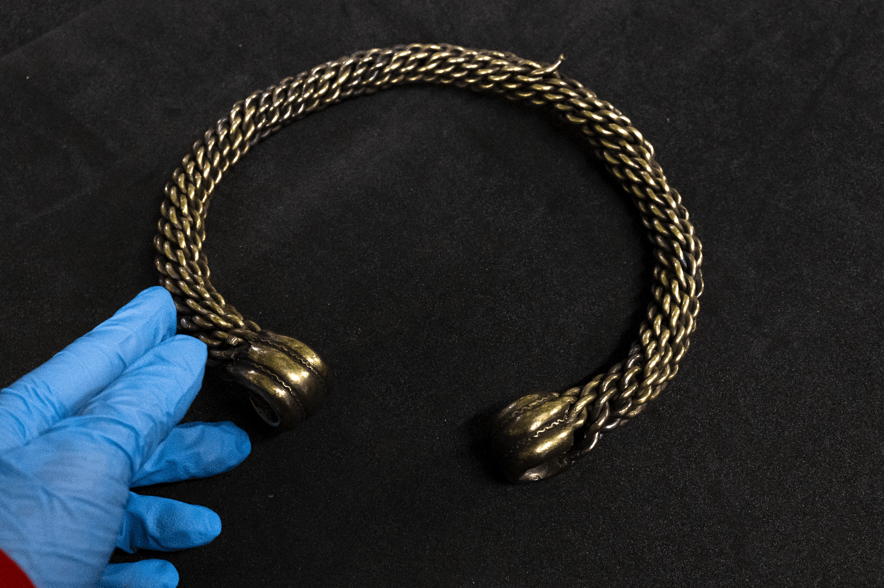
I had a second visit to the Birmingham Museum Collection Centre on the 27th of November with two priorities; to view the Glascote Torc again to redocument from my previous visit and view a large range of the Pinto collection. In seeing the Torc again, I was mostly thinking about getting as much documentation of the object as possible, but this time, I couldn’t help but notice the breakage in the Torc more than I did before. Perhaps the awe I was feeling when I first saw it has worn off and I truly see what is in front of me. In holding it, I noticed a bit of movement caused by the damage from when it was being used, as the Celtic Chieftain would have to bend the metal to put it on. With a combination of warrior power and the weakness of gold alloy, it buckled with a dramatic blow that makes it look like it survived a battle like the Carabinier’s breastplate from the Waterloo battlefield. There is a beauty to its fragility as we carefully (with gloves) retrieve and return it to the box it is stored in, surrounded by a sea of tissue paper. It is almost humorous that it was retrieved from a sewer and kept in a wardrobe for almost 30 years from 1948 to 1970.
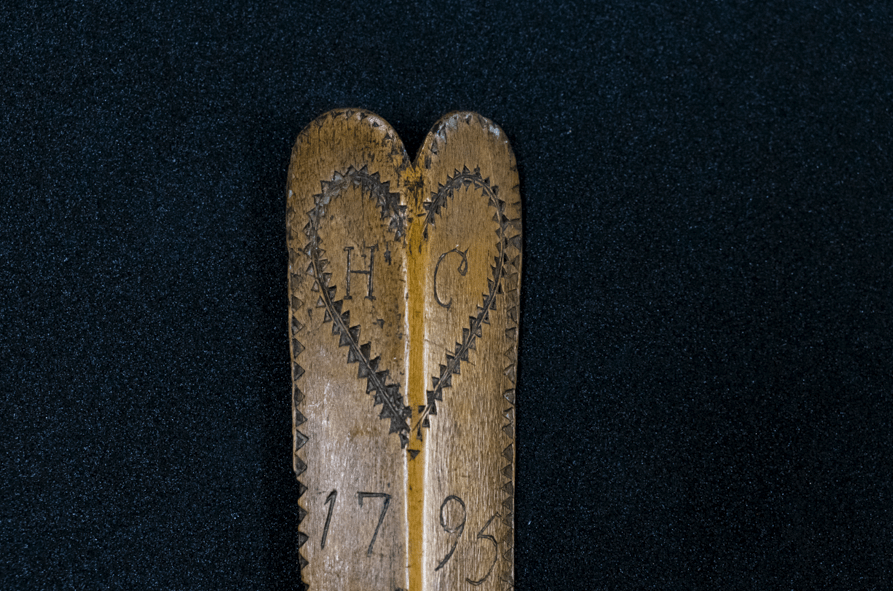
I have been thinking about how beautiful it is to see these surviving testaments of love 200+ years later. I wonder about their stories and how bittersweet it is that the objects intertwined within their story outlast their love. Humans are very cute and there is so much power in holding onto that love, that be romantic or platonic.
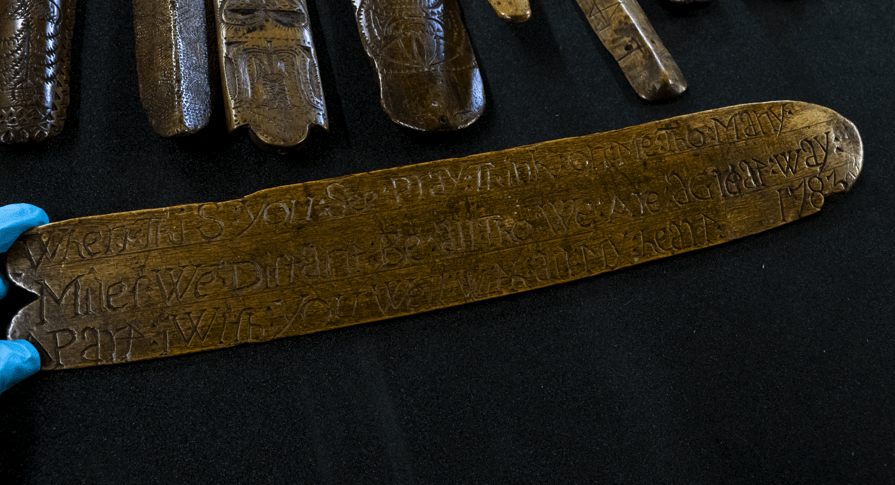
I have been wandering through thousands of photographs and yearning for the stories behind two letters infinitely tied together in time and history with a plus symbol in holy matrimony of Treen. There is an infinite combination and a thousand stories of love from over 200 years ago, did they make it to the end? Were they happy? Where did they bloodline go? Were they good people? A million thoughts race and see who wins.
Obviously, no one is still alive.
Which is obviously sad but ultimately inevitable in the process of life. I find it more amazing that these items live on and meet me here at this moment for me to handle them. These could be easily forgotten and disregarded for their impracticality or lack of usefulness as we no longer where busks; there is so much personal and social history lost for this reason and for a thousand other reasons. It’s a testament to the importance of personal collections outside of the capabilities, focus, or goals of museum institutions as these love tokens are in the Birmingham Museum Collection because Edward and Eva Pinto collected such a vast array of objects, of folk artifacts. Without repeating what I have already said about museum institutions’ attitudes towards it, it is so precious that these social histories are preserved. While not all their history can be known regarding who gave it to whom and what occasion it was gifted upon, its presence is a testament in itself. A testament of love over time.
These ghostly lovers live on, stalking the halls of the Birmingham Museum Collection Centre, and tentacularly bonded by a stay busk love token or an intricate and wildly impractical spoon. Gosh, I hope they liked each other and didn’t die bittering.
Politics of Archives
I think measuring this love with length to denote value is unproductive. Nothing lasts. But it’s important where our hearts and love are, these stories of love stand the test of time in one form or another. Love and value of history, of one another, of culture. It is these processes and actions that we need now more than ever before. It would be remiss to ignore how my practice’s intentions are aligned with what is going on in Palestine at this current moment. My outrage over Carnac and the Sycamore Gap would be selfish if I was not outraged over the destruction of Palestine’s Central Archive of Gaza City, multiple libraries, museums, and historical sites; in particular the destruction of the Great Omari Mosque and The Church of Saint Porphyrius. These are some of the oldest religious sites in the world, Palestine as a historical and holy site is rich with history, to say the least, and this is a soul-crushing loss to the historical world. It should be anyway. I don’t see the type of outrage over these losses as I did for Notre Dame or the Sycamore Gap. My tears have been the same, and my anger has been the same. It is a similar issue. It will always be in the back of my mind that as I celebrate Birmingham’s privilege to preserve history, Palestine is losing the privilege to preserve its own.
It should be treated the same, but the reality is that it is not. This is hypocritical.
The Sycamore Gap tree is only 200 years old, and Notre Dame dates to the 12th Century. The Great Omari Mosque dates to the 7th century (rebuilt in 1360)! The Church of Saint Porphyrius is almost the same age as Notre Dame. The eradication of Gaza has been brutal to the history of not only one religion but also Christianity, Islam, Judaism, and several historic religious communities becoming extinct in a matter of days. Besides history, it is difficult for anything to survive as Gaza, Palestine, is reduced to rubble.
Palestine’s public library (via LitHub)
You might be interested to know that the Birmingham Museum Collection has a few Palestinian items that I am just discovering while writing this.
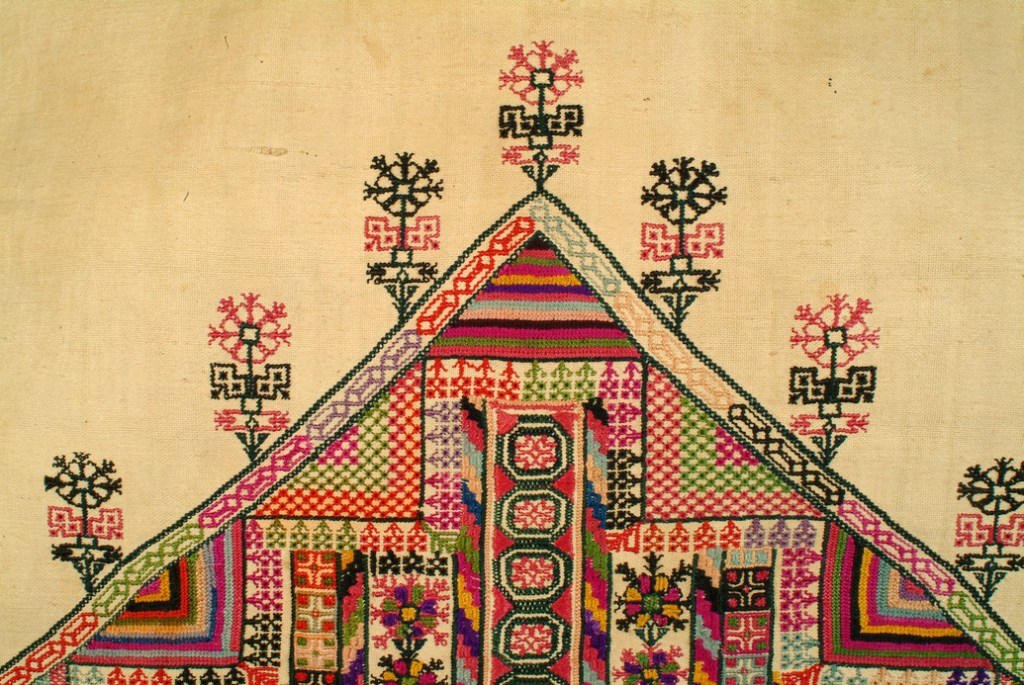
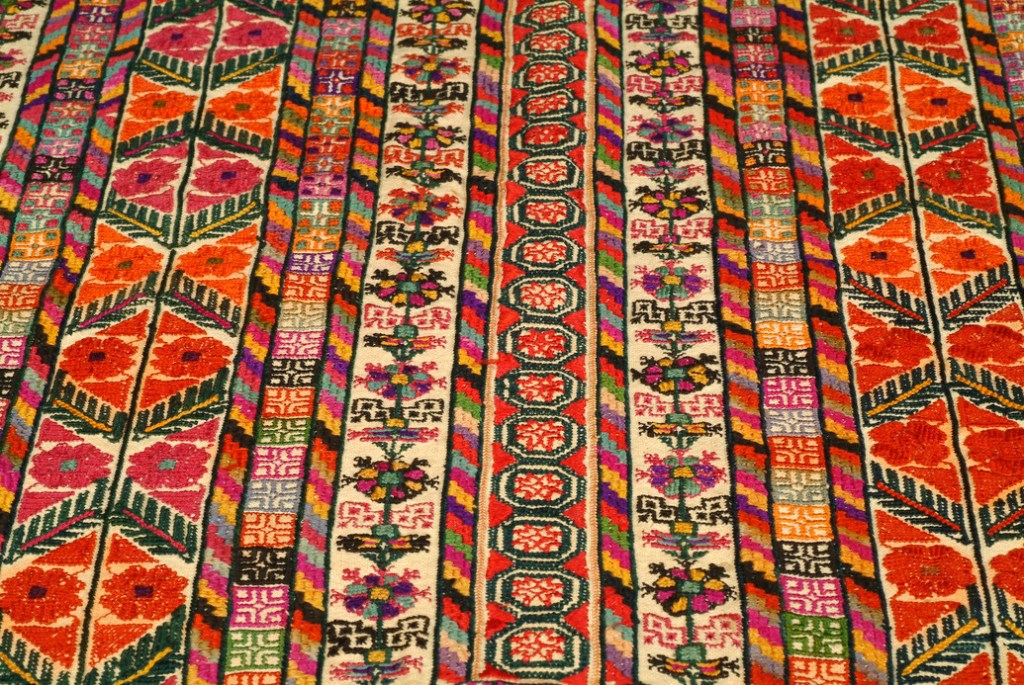
A woman’s dress (Thob) from Ramallah, Palestine. Dating to 1800-1900.
It was acquired in 2003 as a part of the Wilfred Southall Collection.
It is an intricately embroidered dress full of colour and patterns, it is typical of traditional Palestinian textiles.
It is described like so:
“Full-length woman’s dress made of unbleached cotton embroidered in coloured silks. Pointed triangular hanging sleeves. Small round neck slit to about waist level, edged with quilted cotton and outlined in two rows of black backstitch with a white row in-between. The slit is bound and faced with pink cotton. Two neckties are of twisted cotton thread with multi-colored tassels. The seam across the sleeve and the seam to its sloping side have a filling of yellow embroidery in yellow with geometric patterns in crimson, pale blue, pink, orange, black, brown, and purple. The sleeves have embroidered borders along the edge and along the seam using the above colours. The border edging of the lower sleeve is different from the edging of the upper part. All are mainly in fine cross-stitch and employ geometric and plant forms. At the front of the robe is a wide area of elaborate embroidery, straight-sided to hip level, the slopes to a point beneath the neck slit. Worked in elaborate vertical strip patterns, again using geometric and plant forms in a wide variety of brilliant glowing colours. The main stitches used are fine cross stitch, half cross stitch, and satin stitch. Either side of the embroidered panel is a seam worked with an insertion in needle lace stitches.”
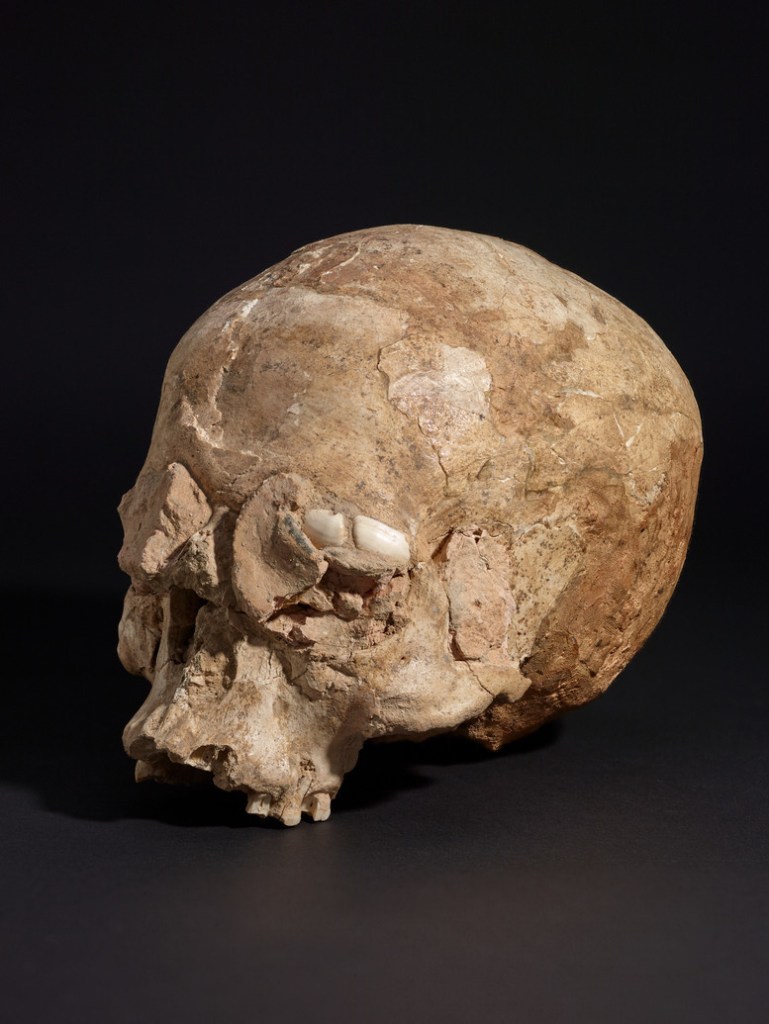
2. Plastered Skull
Plastered Human Skull, Pre-Pottery Neolithic B (c.8800–6500 BC)
From Jericho / Tell es-Sultan, Palestine
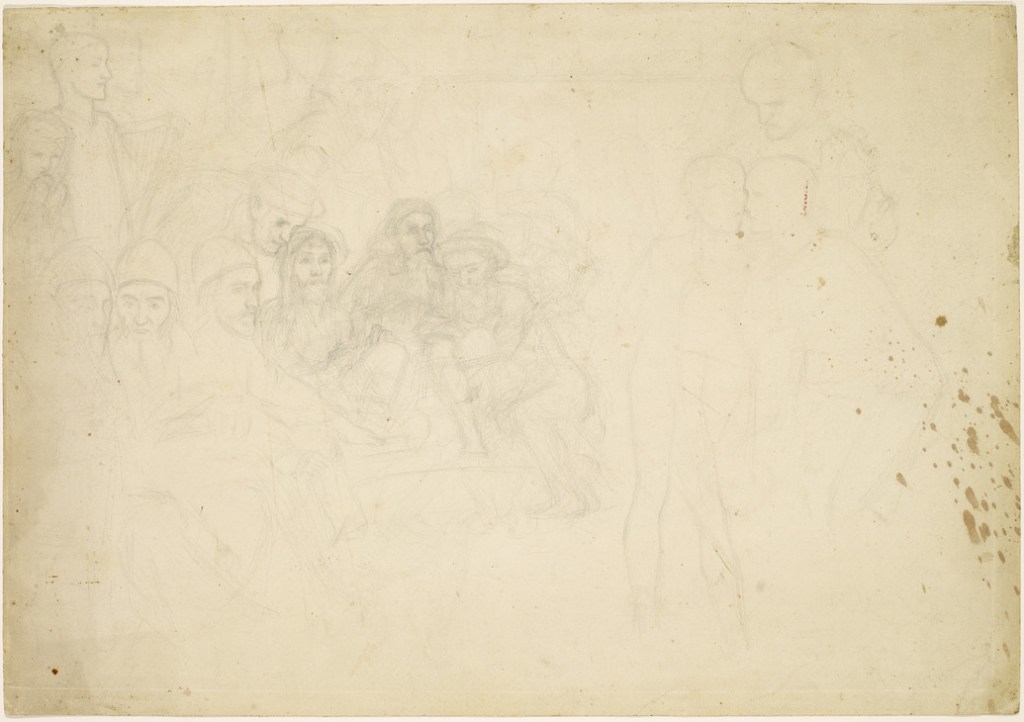
3. The Finding of the Saviour in the Temple – Study of Rabbis and Attendants with the Holy Family
The Finding of the Saviour in the Temple – Study of Rabbis and Attendants with the Holy Family, 1854-55
William Holman Hunt
Drawing based in Palestine.
Myths of objects and how they change the labels of objects.
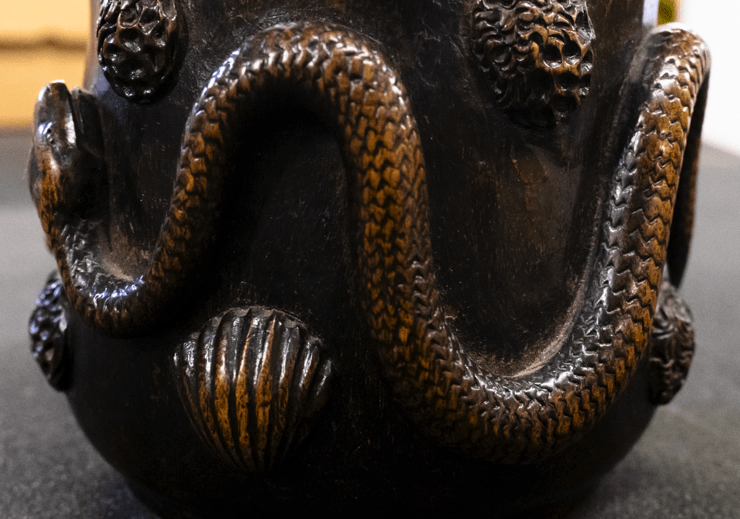
A moment in my visit was when I was able to view the “Witches Brew Bowl” from the Pinto collection and something I spotted in Edward Pinto’s “Treen and Other Wooden Bygones” (1969).
Its an interesting artifact and an amazing piece of craftsmanship, as are all of the items in the Treen collection, especially the spoons and apple corers with moving balls inside (which I imagine are for balance, like a spirit level?). This bowl is adorned with a snake, snails, frogs, and a lizard. It is not difficult or a foot of imagination to conclude why this cup was labeled this way but we must be honest. This is not a Witches’ Brew Bowl. It is most likely some kind of apothecary bowl for bleeding or some other function. It is labeled this way probably because of the combination of natural imagery we have come to associate with ‘Witchcraft’. This was a part of Pinto’s process. He generally bought things for their handcraftsmanship and relation to ‘Treen’, stories get passed around and surround these objects, so they became a part of their labeling. It wasn’t necessarily based on historical accuracy, let alone any research. So, these myths persist through word of mouth.
I was recommended to look at a plate/bowl made by Bernard Palissy in the late 16th century, purchased for the Collection in 1951. It is objectively gaudy and crass, but an interesting object for its creation and imagery. Apparently, Palissy used life casting, where he used some of the actual animals on the plate to cast from. Other animals are a bit skewed in size so we can assume this method was used for some but not all. It is very vibrant with bright dark blues, greens, and creams, but messily glazed and rather “rustique” as the museum placard describes it. I was also shown a cup from the Victorian era which looked normal on the outside but had a surprise frog on the bottom side so when you drink it, the frog is revealed. I have a similar, modern version so its fun that this humorous tradition persists.
But a witchcraft narrative does not surround Palissy’s work like the Apothecary cup. I suppose this brings us back to human stories and interrelations tied to artifacts and how they change our relationships or what they say about us. Perhaps the interpretation is the methodology of wood vs. ceramic, the colour palette, or that we know who made Palissy’s dish, while we don’t know who made the Brew Bowl. To me, there is certainly something peculiar about the Palissy dish as these animals swarm and become a natural multi-species entanglement on the surface. It’s an inspiring and relevant image as a social historical item and piece of art. Palissy most likely chose these animals and objects to test his skills, but this combination constructs an interesting folkloric meaning of nature and co-existence.
Bernard Palissy Dish
Other Projects
The research group I am a part of, Athena, continues to have an advanced influence on my practice with our discussion meetings, manifesto, and emerging projects. It’s a positive structure outside of academia, which has been a struggle to get used to. While the fellowship has also been a safety net, it is all still an adjustment that I think I am only just getting around to after 3 months post-post-graduation. With my graduation on January 5th, that will feel like the final goodbye to traditional academia for the time being until I aim to start my PhD in 2025. This fellowship is the playground for those ideas and research. After graduation, I will be embarking on a residency with Birmingham Open Media for their Immersive Arts Bootcamp and aim to develop these ideas for narrative, film, and interactivity/community within that residency. My idea, at the moment, is to recreate a site, of either historical or Pagan significance for the audience to explore and hide a story within that of clues. It depends on how much I can learn and achieve in 3 months! I want the residency and what I make at BOM to exist alongside and complement this fellowship as it introduces another commitment to my practical plate, and I find it more productive for all these practice strands to coincide with one another.
I was thinking of that place being Weoley Castle as it is a local, destroyed monument. I was thinking of the site being used for a film but I was uncertain about what angle to take, so I think transforming the site into the digital, to be explored and uncovering items from the Museum Collection on the site could be rather interesting!
“The fascinating ruins of Weoley Castle date back more than 750 years old and reveal the remains of a fortified manor house originally built as a hunting lodge by the Lords of Dudley. Set in the heart of what was once a thousand-acre deer park, the grounds extended almost as far as the city center.
The ruins seen today are believed to date back as far as 1270, making it one of the oldest buildings still visible in Birmingham. As such it was classified as a scheduled Ancient Monument of National Importance in 1934 and a series of archaeological digs in the 1930s and 1950s uncovered a rich collection of historic treasures.”
(via Birmingham Museums Trust)
Circling back to Athena, I have begun to have conversations and started to plan a large research project for a publication as a sub-group called The Changelings, with two fellow Athena members and artists. Spite and Deoffal Maldoror. There is only so much I would like to reveal about the project publicly, but I wanted to mention it as it will be an important part of my research and practice moving forward. We will be focusing the book on folklore as it is a common interest between the three of us, which will be combined within prose, poetry, and illustrations.
Fellowship Output:
In terms of studio output, I have bought a roll of Lino, 90cm x 200 cm and I aim to transform this into one printing block which depicts an epic and I plan to print this onto a banner of fabric.
I’ve also been experimenting with smaller sizes of Lino, ranging from 5cm – A2, and plan to experiment with symbols, images, and storytelling. I would also like to develop a repeated image icon for my practice as a logo. I’m not sure why, I just think it would be cool for my website, branding as an artist, and recognizability.
Next Steps for 2024
Moving forward with my commitments to the fellowship, and work at Ikon Gallery and BOM, I also plan to dedicate more time, energy, and resources to making my studio a more productive space. I plan to move into a larger space within Lombard Method as a sole occupier! My first, very own studio! Alongside some further job plans, I’m hoping to invest more into kitting the place out with a rug, comfortable seating, materials, and a printing press! I would really like to get an A2 printing press as it would be more practical for a variety of sizes, but I think I might have to settle for an A3 for now. We will have to see!
In the early new year, I aim to take my third and fourth visits to MCC, with the fourth being my final visit as I am allowed four visits in total. This will conclude the main portion of the research into the archive and then the rest of the four months will be focused on developing my studio, printmaking, the Changelings project, and the BOM residency. It will be a lot, but it will be worth it!
How are you this month as the days grow shorter and the light slowly fades? I’m starting to be seduced by the comfort of my own bed for a few extra hours in the morning and night, its adding up. The heated blanket is too good to resist…
I am a cat.
This third post marks a month of the Whitworth Wallis Fellowship and it’s going by so fast! Alongside some personal breaks and working at Ikon Gallery, I’ve been very busy in and out of the studio, and I had my first visit to the Museum Collection Centre on Monday, November 13th.
The visit started with a site induction, which was quick as I will be visiting under supervision, but I mostly had to declare I knew I should put things back where I found it, clean spills, report damage, to not go if I had COVID-19 and to wear gloves pretty much all the time. I spent a little while making notes on the Pinto Collection Treen book, and pointed out that Witch bowls and cups are mentioned twice so hopefully they are in the collection! I asked if there were any Pagan or Wicca items in the collection within the first meeting with the collection team, which was met with a hesitant unlikely. The items I noted down were:
Apothecary collection of doctor’s tools, jars, and artificial limbs
Bloodletting and cupping tools (Bleeding bowls)
Microscopes and microscope slides
‘Witches Brew Bowl’, 17th Century
Stay Busk Love Tokens, 18th Century
Carved Thornwood Girdle, French, 14th Century
Ornate Drinking Cups
‘Witch Cups’
Bickers and Quaichs
Wassail Bowl and Mortar, 17th Century
Scandinavian Burry Maple Tankard
Tudor and Elizabethan Roundels
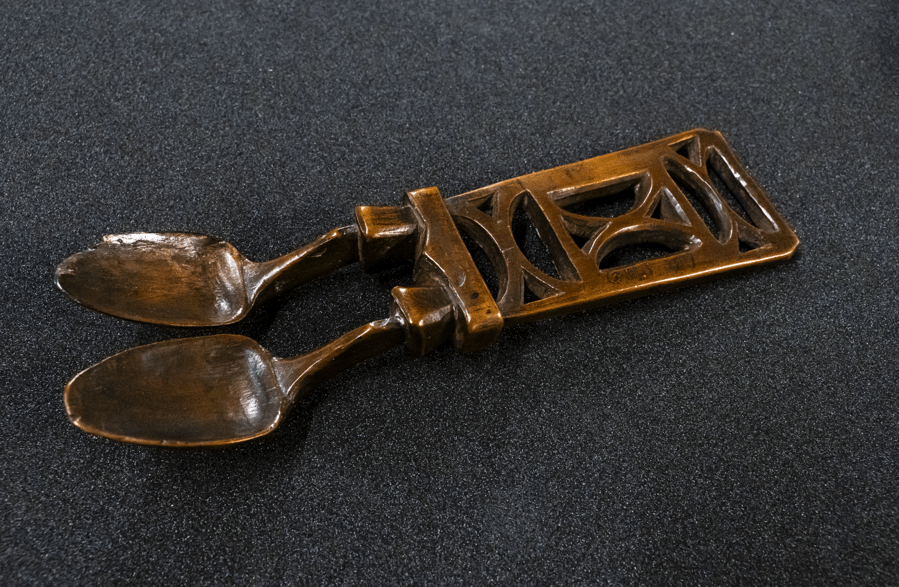
Ornate Welsh Love Spoons
Mouse/Mole Trap
Diamond Merchant’s Balance Scales
19th/18th Century Lay and Character Figures
Tobacco Stoppers
Knitting Sheaths
Ginger Bread Moulds
Cube Sundial
Apple Corer
Medieval Itch Comb
However, I managed to find this book, Treen and Other Wooden Bygones by Edward H. Pinto, online for £23+£3pp, which arrived as I was writing this so I will spend blog #4 divulging you on all the things I have discovered from this hefty 458-page encyclopedia!
Wooden Bygones (1958)
Prior to my visit, I was sent an amazing transatlantic documentary on Eva and Edward Pinto (see above) which depicted their collection when they displayed it at their home in Northwood, London, and seen by around 120,000 visitors from across the globe. The ‘Treen’ Collection, a collection of small eccentric domestic wooden objects, is a diverse collection of social history and domestic craftsmanship dating from the Middle Ages to the 20th Century and documents craft from across Europe mostly to the U.S.A, Canada, Australia, South Africa and more. There are about 6,000-7,000 individual artifacts collected by Edward and Eva Pinto and as it was said to me at the Museum Collection Centre, they did not just collect one of everything. They collected everything. There is a large number of items that are simple and blank, but they are still important to document even though the intricate objects are much more interesting. The two things I find really important about the Pinto collection are that Eva is also credited for the collection and that folk collections are largely rejected by British museums. For Birmingham Museum to take on such an important and expansive collection of Folk Art is so important for the general public and for a tangible connection to social culture. Why is that important? Maybe it’s because British museums largely reflect other places. Maybe it’s because of Englishness. Maybe it’s because we are so embarrassed by our own culture in favour of others, losing our own stories and selves in the process. I once heard about a big museum rejecting folk costumes because they were ‘badly made.’ Folk is fleeting, it’s evergreen. Ever changing, evolving as the tides change, the ribbons fly and the effigy burns. It’s childish? I was never ashamed to be a child of the corn in the time of Ostara. Does craftmanship make history make history and culture more important, when it’s easier to preserve and easier for you? I would think the Pinto collection proves this point, that they are valuable because they are well made. A Trojan horse is also ‘well-made.’
Wooden Bygones(1964)
The Pinto collection tells a full story of eccentric domesticity, as I like to call it, and wooden bygones but it obviously doesn’t tell a full story of Folk art because that was never the intention. Its preservation of Folk culture is almost incidental in its focus on social history. It’s great that the Pinto’s wanted it to be owned by the public before they died, and it also outgrew their home. It was no longer feasible to stay in Middlesex so they put out a call to museums for offers and Birmingham was the quickest by one day as they called first. It’s quite radical that something left London for once.
Something that sent me down a bit of a research rabbit hole was one particular moment in this film when Eva demonstrates the gingerbread molds and the narrator references an old turn of phrase, Taking The Gilt Off The Gingerbread, stemming from when gingerbread was decorated with a thin layer of gold leaf in the Middle Ages. To take the gilt (gold) off the gingerbread means to make something less attractive or to spoil something enjoyable. I just think it’s such an eccentric expression that perhaps it should make a comeback!
Museum Collection Centre Tour
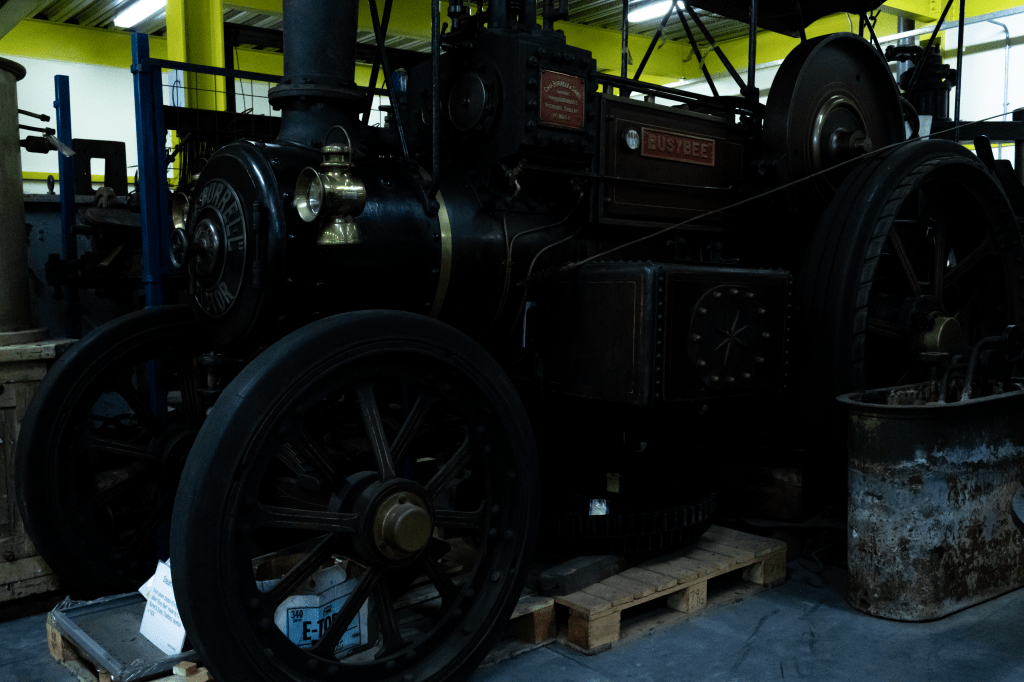
Then the personal tour kicked off and I first saw the large row of shelves where the majority of the larger items in the collection are stored, but even larger items such as Hew Locke’s Foreign Exchange (2022) and a variety of old transport are stored in an open area of the warehouse. Public tours do take place and this part of the collection center is where they take place. It is arranged for this purpose.
The most surprising element of my trip was the level of taxidermy within the collection…there is shelves and shelves AND SHELVES worth of animals preserved within the collection. Even someone’s cat. I was aware there was taxidermy within the collection and even suggested it would be good to see some of them as a part of a visit as animals are an intrinsic part of my practice, storytelling, and symbol within folklore. I’m not criticising the collection for taxidermy, I’m sure natural history has probably been beneficial, but it doesn’t change that it is difficult. I was actually fine until I saw the domestic shorthair cat, and then I froze, not wanting to go forward. This is problematic for me as a vegetarian and lover of all (most) animals, but it brought me back to the reality of these animals turned objects. It looked like the cat I see in my garden and have tried to befriend since I am often apart from my own cats who live with my mother. It let me pet it the other day and tried to storm my house. Now, static fur, petrified tail, she must be so dusty. She must be so cold.
Then after the tour, we went to the part of the archive where the metals are kept, which is literally kept behind locked bars! Oh, man. I got to hold (with gloves) the Glascote Torc!
The Glascote Torc was discovered in 1948 by S. Bates and G. Croshaw in a sewage trench of a boat building yard by the Coventry Canal. This is between Glascote and Amington. It was cleaned and polished by Sidney Bates and kept in his wardrobe until February 1970 when Bates’ wife, Grace, saw a program on the 1968 discovery of the Ipswich Torcs and realised what was in her husband’s wardrobe. It was promptly reported, declared a 1-pound gold alloy treasure trove dating back to 100BC-100AD, and bought by the Friend of Birmingham Museum and Art Gallery for £7,500. What I found particularly interesting and would love to know more about was that I read a passing reference to the effect the Torc had on the relationship between Bates and Croshaw. Croshaw is hardly mentioned in the story of the Torc and apparently, it caused a rift between the two of them. This is a theme I have noticed when the treasure is discovered by two people; money and fame are more powerful than the bond and it never heals.
£7,500 in 1970 is worth £143,072.00 today. I have no idea who got it and if it was even divided up. Maybe it was Mr Croshaw who was mad, I wouldn’t blame him.
Finney Coins
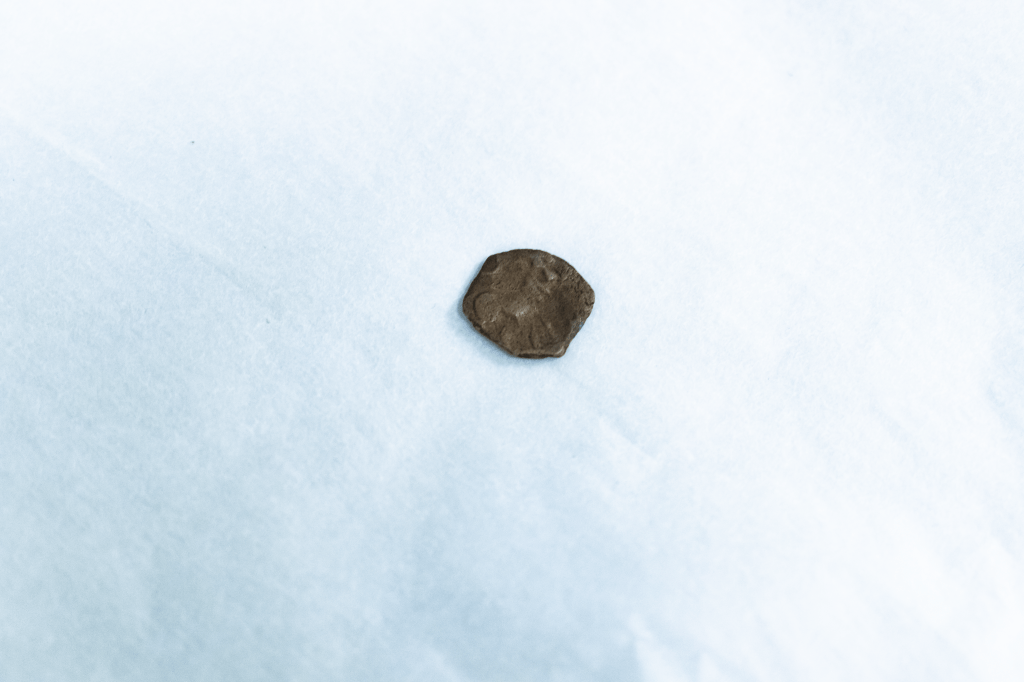
Then I spent a large amount of the visit looking at each individual Celtic coin within the Finney coin collection. I’m not really sure what to think yet. They were smaller than I expected, some were thicker and some were very thin. Very different from the modern coin and yet still so similar after all this time. I think there is probably something to be said about understanding heritage through coins. The tangibility of culture through currency is ironic to my own beliefs, it’s probably why seeing the Torc was such an important moment. It’s social history. Someone wore that, they earned a rank, a craftsman made it, and someone found the metal in order to make it. But the coins are still a representation of culture. I saw so many different animals from pigs to horses to some kind of pegasus beast, with astrological markings. Stars and flowers. It’s not just about rulers. It was especially touching to see them after a 2,100-year-old coin, which is one of three coins found to bear the name of Esunertos, a male British ruler in 1 BC, was auctioned off for £20,400. A new world record. I found it kind of heartbreaking to see such an important item of history enter public knowledge and exit public ownership into a private collection so very few can enjoy it. It doesn’t settle with my spirit at all.
I sent the rest of the visit to the paper archive, which has everything that can be known about each item in the collection. Most of the documents are just memos by the Museum on acquiring and learning about the items so there was a lot of wade through before getting to what was actually relevant. Although I really struggled with the papers on the Finney coins. I couldn’t really find out much about him as a person, why and how he collected, and the extent of his collection. I found his passports though. He died in 1993, which is when and how the Birmingham Museum Trust acquired his collection. I held his books where he recorded who he bought his coins from, where they were found, what it was, and how much he bought them for. It was so strange and cool. I’ve always had a burning desire to be nosey. I know to always hold back because I don’t want to be rude, but man! I want to look through every single paper folder in that entire room. It’s a tangible part of the object’s history to see all these old memos from over 50 years ago, asking people to weigh items, thanking them for doing so, asking experts to give their analysis, and their subsequent analysis reports. It’s all so interesting. I have no idea what to do with it but I need to know it all now!
Unfortunately, I cannot include my photos of the Torc and several of the coins as I had a tragic incident with my SD card and tried to retrieve what I could but I could only save 38 photos of the 370 photos I took during the visit. It has been extremely difficult to process and reckon with as those images were extremely important for this fellowship. Luckily, I have 3 more visits to the collection, which means 3 more visits to make up for what was lost. I still have my memory and notes, it’s just a shame I have little documentation. My second visit is next week and I plan to view as much as I can of the Pinto collection and re-document the Torc.
I think the next port of call for this fellowship is to visit the Weoley Castle site and then request to see as many items from that collection as possible. It’s a strand of interest I need to explore as it’s where I live now and I’m enjoying collecting all the stories that surround these artifacts. I still need to go to the library. All in good time I suppose. There isn’t a rush!
One thing that caught my eye is the endless intricately carved love tokens within the Pinto collection. Does anyone carve their lover a Welsh Love Spoon to eat some simple porridge anymore? It’s something I’ve been thinking about a lot as a woman, a single woman, trying to navigate this current tinder/hinge landscape. Everything is so disconnected and yet we still sing our hearts out to Taylor Swift’s He Is in Love. Has he ever been in love? Why is that the captivating movement when time stands still, his moment of realisation, because it’s so rare? We must celebrate every inch of attention he grants us after waiting on the phone every day and night. I’ve been there, I was an 18-year-old girl once. But now I’m 22 and grown, or more grown at least. I still remember that girl, I blamed her for her naivety when it came to men. I blamed her for her hope and where it got me, where it left me.
Michael Liked You.
Rupert left a comment, press to read.
Laura matched with you, but she will never reply.
Great, but who will betrove me a Busk Love Token for my Stays? Not even my woes? I fear I’ll never be a Sabbath child who is bonny, blithe, good, and gay.
And then I heard “She Used To Be Mine” by Sara Bareilles on the bus and I remembered that girl. I remembered how everyone blamed her for where she was left. I remember she blamed herself. I never remembered anyone blaming the man. I never remembered his life not moving on. His mind. His memories. He was not in love, life moved on.
I remember this girl. I remembered this girl when I was told my dark henna meant my future love would love me a lot and realised her hope had embers amongst the ash.
I wonder if she will ever receive an ornate mole trap or a knitting sheath with a cat on top.
It reminds me of a Reel (I know, soon we’ll be citing them) I saw where the sound says something kin to “You’re absolutely perfect, but I want to see if I can find something better.” What will you make for the better woman who only exists within your gaze, an intricate itch comb? I suppose these objects are symbols of another time when so much more was given up by women when they were ‘in love’ but I think we can find a narrative where unconditional gestures of affection attached can co-exist with love, acceptance, and equality. When will this tax return of love be seen too?
Another thing –
The idea you had of me,who wasshe?
All my love,
Mads
P.S. I’ll update you next time on what I’ve been making xxx
It’s been a fortnight since I last wrote to you, it seems like a good time to check back in with you and fill you in on what I’ve been up to. I ask myself the same question, what have I done? In my mind, it feels like nothing has happened and yet, so much thinking, talking, meeting, seeking, and making has taken place. My mind could never simply sleep, it’s not in my blood.
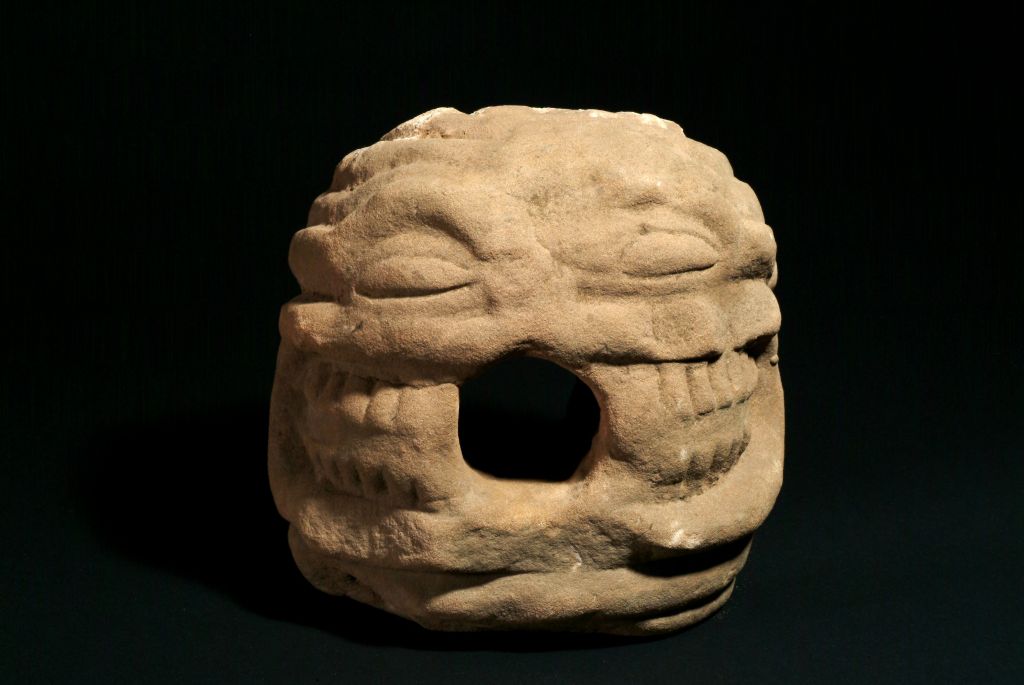
To define this fortnight, I will fill you in on the first preliminary meeting with the Birmingham Museums Trust Collections team in which we discussed my interests in Celtic, Medieval, Folkloric, and Folk artifacts within the collection. I’m particularly excited to see the Numismatic, Pinto, Celtic, and Weoley Castle Collections. I think sites are an intrinsic part of my practice that I have acknowledged at points, but I have not dwelled on it so when I realised that they had a Weoley Castle collection, cogs began to turn in my mind as I have recently moved nearby and realised the history of where I live is also an interest, not just for my name’s sake or the place I feel is threatened. My own alignment with this new place and the opportunity to learn more about the history I drive by on the bus is something to consider, I don’t know the resolution, the relevance, or the end goal of this interest, but I found the objects within that collection particularly interesting in relation to my practice as a medieval site with depiction of anthropomorphic and hybrid beings.
Sandstone Gargoyle, Found at Weoley Castle
Our plan of action is to gain a general overview of the collection to begin with as to use the words relayed to me, the collection is overwhelmingly large. To know what is there first, as not all of it is publicly available, would be beneficial in the long run for developing work shaped by research into the collection. I’m very excited about what I will find and can learn more about, especially in regard to talking to experts on particular topics and objects.
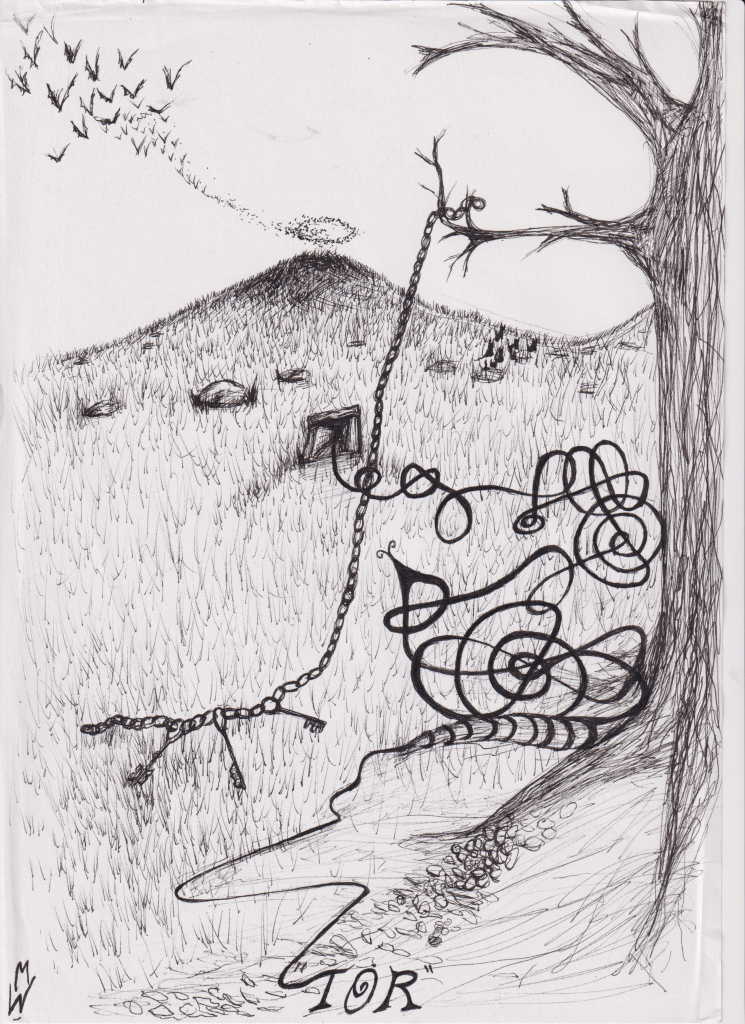
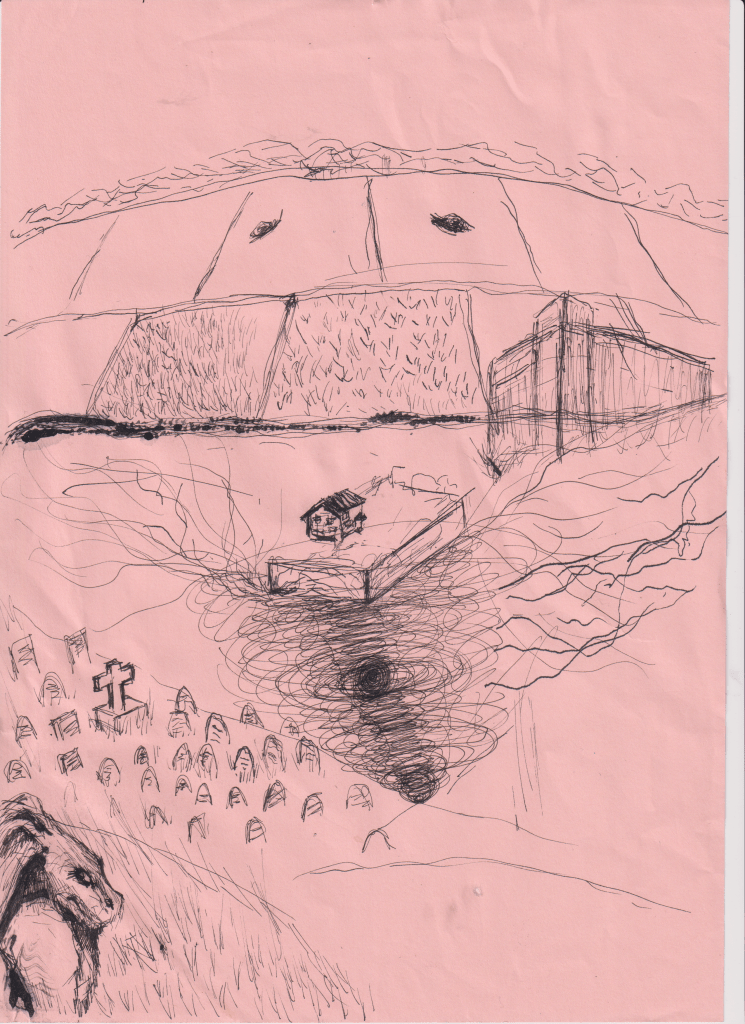
“Tor” (2023)The Pit Under This House (2023)
I have been slowly getting back into research, with the help of Athena research group. In its current form, it is an informal group of artists from Amass Artist Collective which have been meeting semi-regularly to just talk about where we are at in our practices/research and share material we are interested in or think others will be interested in. It’s been very helpful in regards to developing my drawing practice as the members have shared with me books on folklore, Japanese manga, and historical Japanese drawings. Not only is the artistic community comforting, but it is also vital to deconstruct the barriers academia forms around us as art students. I won’t lie and say I have never viewed my fellow artists as a threat and/or competition but there is literally nothing but sadness and isolation to be gained from that. Our priority for Athena is at the end of the day to deconstruct the inaccessibility and pretentiousness of research, to healthily share and celebrate knowledge. In our very early, foetal stage, I think it’s already achieving that.
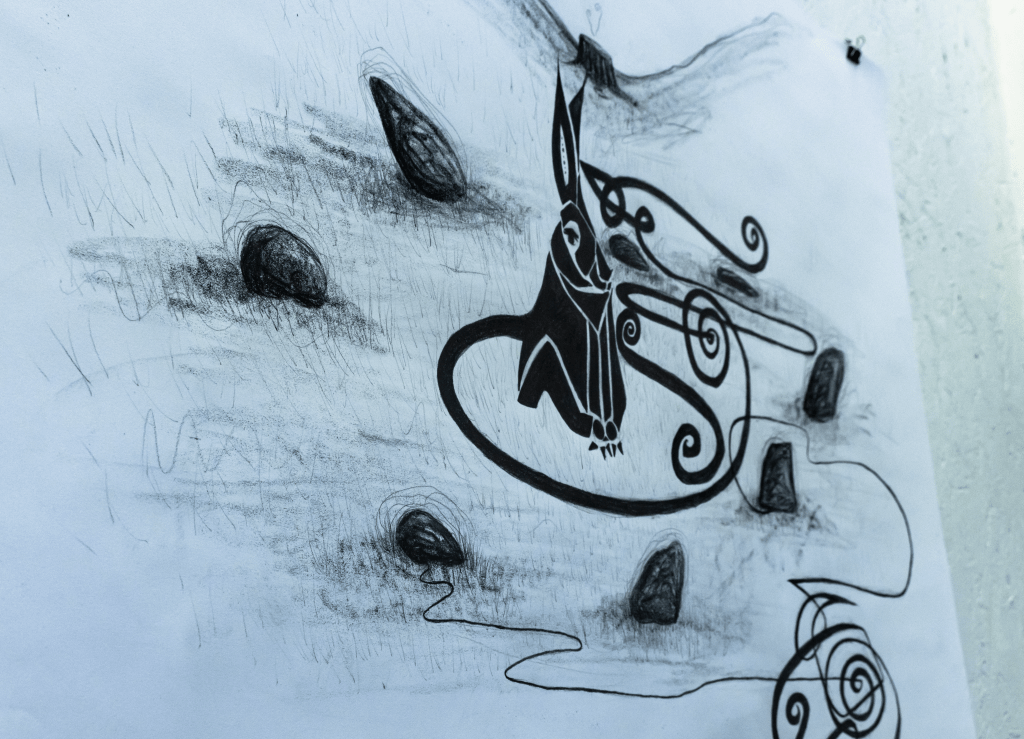
The Hare At The Gap (2023) Graphite on Paper, 42 cm x 59.4 cm
I started a drawing at an Athena meet-up that just came about automatically during the conversation, combining elements of what I’m thinking about in my practice in terms of site and the sacredness of site, with objects I had seen in a folk objects book someone brought to the meeting. It was the three keys on a chain, which if I can remember correctly, is worn to symbolise health, good luck, and fortune, in relation to key magic (Hannant & Costin, 2016.) I’m not sure how I really feel about Wicca and witchcraft and how it affects the understanding of Paganism and Celtic culture. It’s all jumbled like folk. It’s ever-changing and evolving. I often wonder if Wicca is even valid as it is a neo-pagan religion, but that’s an overstuffed can of worms.
Celtic Coin depicting a Pig
Don’t fret, I’ve been doing my own research outside of the research group. I’ve mostly been looking through the online Birmingham Museums Trust archive, which does not have the entire 800,000 objects in the collection, but it has a decent amount to get a taste of what is in-store at the Collection center. I’ve been particularly interested in the Celtic and Medieval objects, which I’ve started to use as inspiration for automatic drawings that combine the illustrative style of Celtic coins with symbolic animals, landscapes, and Celtic knots into these mystical site drawings of Tors and the Sycamore Gap. I don’t particularly know what I’m saying yet, but I feel like the narrative draws together on its own. What does the animal mean? Does it stalk you? Is it waiting? Is it a warning? I dreamed of a Hare before the Sycamore gap attack happened and it felt like a sign or a warning. As if I could have done something from where I am! The Celtic significance of the Hare is prosperity and good fortune, as they were believed to have connections to the Otherworld. Perhaps my connection to Gwyn Ap Nudd did not leave at the Glastonbury Tor, the Fae power is not resting in contemporary times.
Unfinished work: The Pig Drinks At The Brook (2023), Graphite and Oil Pastel on Paper.
Traveling is another aspect of research and thinking that I’ve been doing a lot lately between Birmingham and Belper as I stared out the window for 2 hours a day. I’ve only drawn on the train once, so most of the time I’m just wondering about industrialism, Paganism, and the lack of forests around me. I’m currently reading All The President’s Men when I’m on the bus, which I will admit, has absolutely nothing to do with my practice, but I’ve always found intense investigative journalism to be interesting. It’s also great to read about well-intentioned people seeking justice and doing great at what they do best. I’ve only ever known Carl Bernstein as Nora Ephron’s ex-husband (Writer of my favourite film, When Harry Met Sally), which I know will be hilarious to some, but I get it now. These are great writers and researchers, so great in fact that are thrown at the reader in every single sentence all the facts fly out of my head. It’s dense. I must say that I still enjoy When Harry Met Sally more than All The President’s Men, guilty as charged.
Halloween was this week, and I can’t help but wonder from my experience… Is All Hallows Eve a dying holiday? Most of the seasonal holidays have been reduced to niche local events already. Halloween is the lingering favourite, but I don’t think even capitalism’s endorsement is enough to save it. Not all the sweets and last-minute supermarket plastic costumes. One Halloween missed has stolen our souls to the Otherworld, and we become an echo of our old selves. You were yourself when the clock arrived at the stroke of midnight and that’s the last time you ever thought of seasonal joy; they all roll into one. I’ll admit I did nothing either but I didn’t go down trying. I suppose there is nothing wrong with staying at home in a witch outfit and watching The Curse of The Were-Rabbit over dinner and a glass of hot chocolate, but I wouldn’t say it’s ideal.
My heart longs for the burning of a ginormous, cinematic wicker effigy.
I never expected to be writing to you, let alone writing to you so publicly. So exposed. I keep my research to myself, but generally, my research has functioned for grades so now leaving academia as a student, at least for a short while, it makes sense to expose it. Expose it? Release it, for it to be free and accessible, conversational almost? I always struggle to explain my work, because there are so many things to say. So many layers that a 500-word count didn’t do justice. Maybe it’s time for you to read along and find out.
The thing is, I don’t want to work on this alone. In leaving university, I leave behind a cohort. The comfort of community. We might not be on the same journey, but I would like to invite you to follow along with me while I venture through the archive, waging my way through making new work.
I got the call yesterday that I have been selected as the Artist fellow for the 2023-24 Whitworth Wallis Fellowship, with Birmingham Museums Trust and Birmingham School of Art, my BFA and MFA Alma mater. It feels like finishing my Master’s was a mile away in regard to everything that has happened both professionally and personally since and yet in actuality, I have only spent just over a month away before returning. Well, it will take time before I can return to make work, but it feels so exciting to already expand on my legacy with the building after I just said goodbye. Something ties me back to those red bricks and mortar again and again. Finding out I got the position while in the studio with my co-studio holder/friend was a special moment and then I got to tell my mum straight away about it over the phone; it feels like an acute universal alignment.
I’m passively superstitious. Last week when I bought a coat from a charity shop I had been looking for, I was content in finding the right winter coat. It wasn’t until I was heading to an interview last Friday that I realised the coat had the same name as what I was being interviewed for, it felt like quite the perfect sign. I was cautious about telling anyone about the interview or that I had the interview, or even how I had felt about it, because sometimes it feels as if you speak about things too soon, they never flourish and the flower ultimately wilts. Perhaps it’s just a gut feeling given too much meaning, maybe I know the outcome better than I’m happy to admit at the moment. When you know the flower will flourish beyond the power of word, you just know.
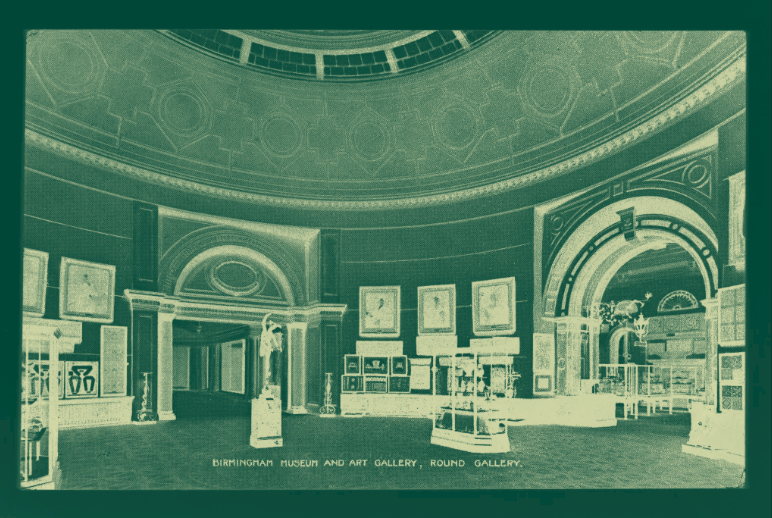
Like I said, passively superstitious. I wouldn’t bet my life on any of these feelings. It’s like I generally say, bad or good things happen in threes. Is it a universal alignment to teach you these lessons, or is it just a pattern that happens just out of general circumstance? I quite literally do not know. Before I even applied, I briefly researched Sir Whitworth Wallis and the legacy the fellowship was upholding. I found a photo of him at the Birmingham Museum and Art Gallery amongst a sea of paintings, books, busts, and papers. It honestly looks like a researcher’s dream. Amongst the darkness and light, Wallis can be seen in his chair reading a paper. There is little I can speak to in terms of character or intent, the support and championing of the arts is clear and felt after all these years. To urge a return to the archives, to look back on history, and to discover how it can inform the present compliments myself and my practice in more ways than words can describe at this current moment.
Of course, this is only the beginning. There is so much more to report and say when I begin to enter the archives and truly dive deep into making new work again! How exciting is that?
I can’t wait to see where this journey will take me and to share it with you.































 Mads Washbrook